Are you torn between a brand-new home in a planned neighborhood and a piece of land where you can build with more freedom? If you are looking in Plain City, that choice can shape not just your budget, but your timeline, your daily routine, and how much decision-making you want to manage. When you understand how utilities, zoning, approvals, and property rules work here, you can make a much smarter move. Let’s dive in.
Why this choice matters in Plain City
In Plain City, buying new construction or buying acreage are two very different paths. A neighborhood lot in a planned development usually comes with a more defined process, shared amenities, and established utility access. Acreage often gives you more flexibility for the property itself, but it can also require more planning and approvals.
That difference is especially important in and around Plain City because development is split between managed neighborhoods and more site-specific rural or semi-rural parcels. If you are deciding between a builder community and land with room for a barn, detached garage, or workshop, you are really choosing between convenience and control.
What planned neighborhoods offer
Master-planned and PUD-style communities are built to feel organized because they are. In Plain City, residential PUDs must provide at least 25% common open space, and that space must be protected and maintained through an association or similar entity. That structure is a big reason these neighborhoods tend to feel more coordinated than open land.
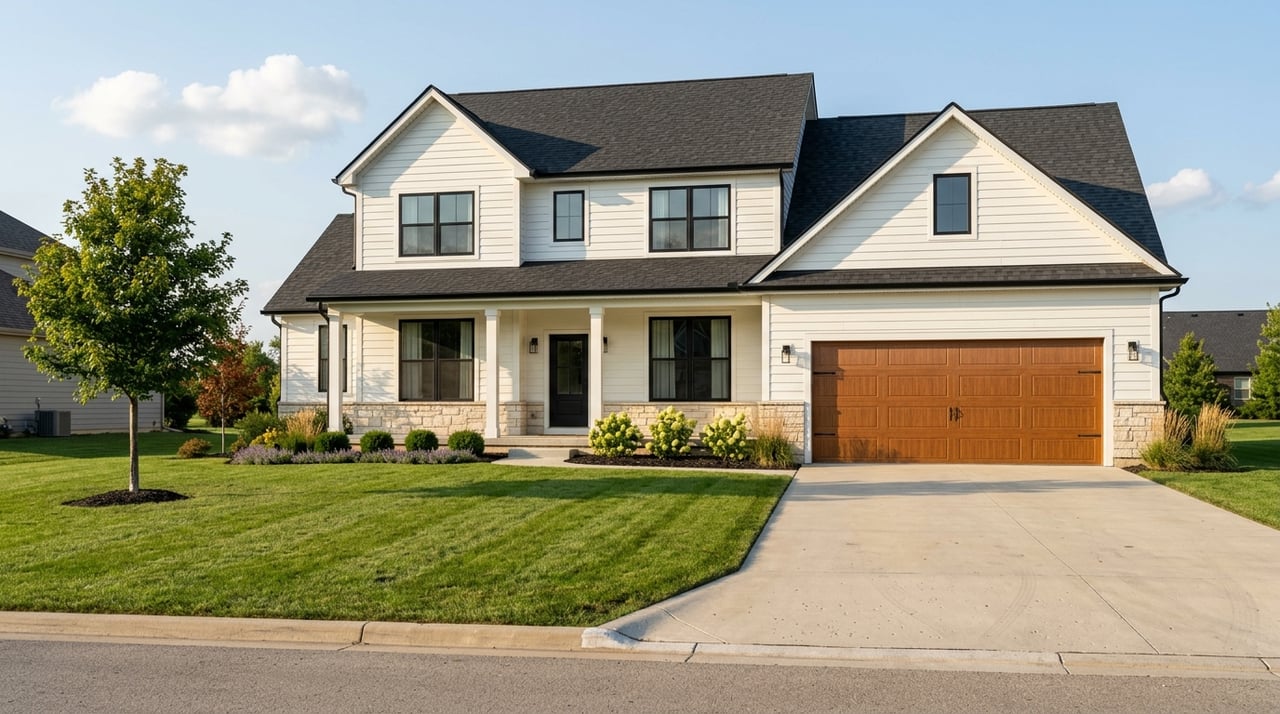
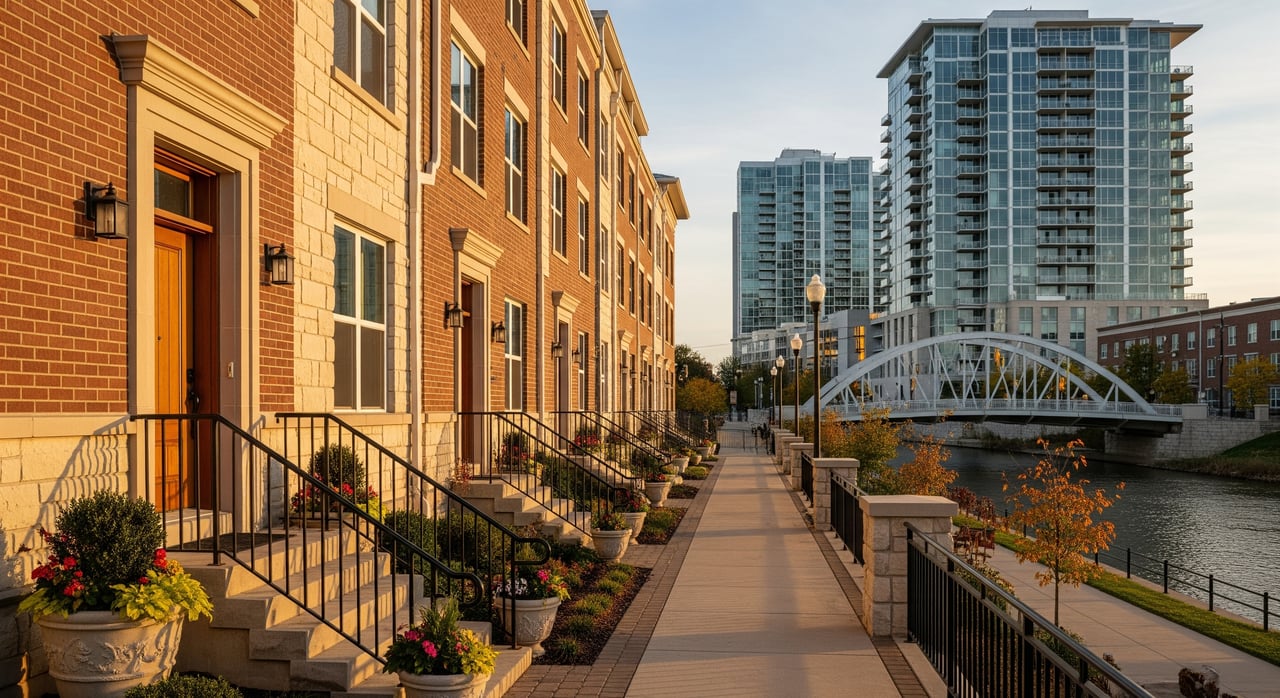
A good local example is Jerome Village, a 2,000-acre master-planned community in Jerome Township. It includes multiple builders, a range of price points, trail access, a community center, retail, and on-site property management. The community also provides guidance around HOA and community fees and exterior modification requests, which reinforces the managed-neighborhood experience.
Benefits of buying in a planned community
If you want a more predictable path, a planned neighborhood can be appealing. In many cases, these communities are designed around public water and sanitary sewer, which reduces the number of moving parts compared with a raw parcel.
You may also like the built-in structure that comes with a neighborhood setting. That can include:
- Community amenities
- More defined lot layouts
- A clearer utility path
- Standardized builder processes
- Shared open space and trails
- More predictable approval steps
For many buyers, this means less guesswork. If your priority is moving into a new home without coordinating every site detail yourself, this route often feels simpler.
Tradeoffs to expect
That simplicity usually comes with more rules. In a PUD or HOA-governed setting, zoning is only part of the picture because the association may have stricter standards for things like fences or exterior changes.
Plain City’s fence code specifically tells owners to check any HOA rules that may apply. Jerome Village also references a Master Association, HOA or community fees, exterior-modification submissions, and resident guideline compliance. So even if a feature is allowed by local code, the neighborhood’s governing documents may still limit what you can do.
What acreage can offer
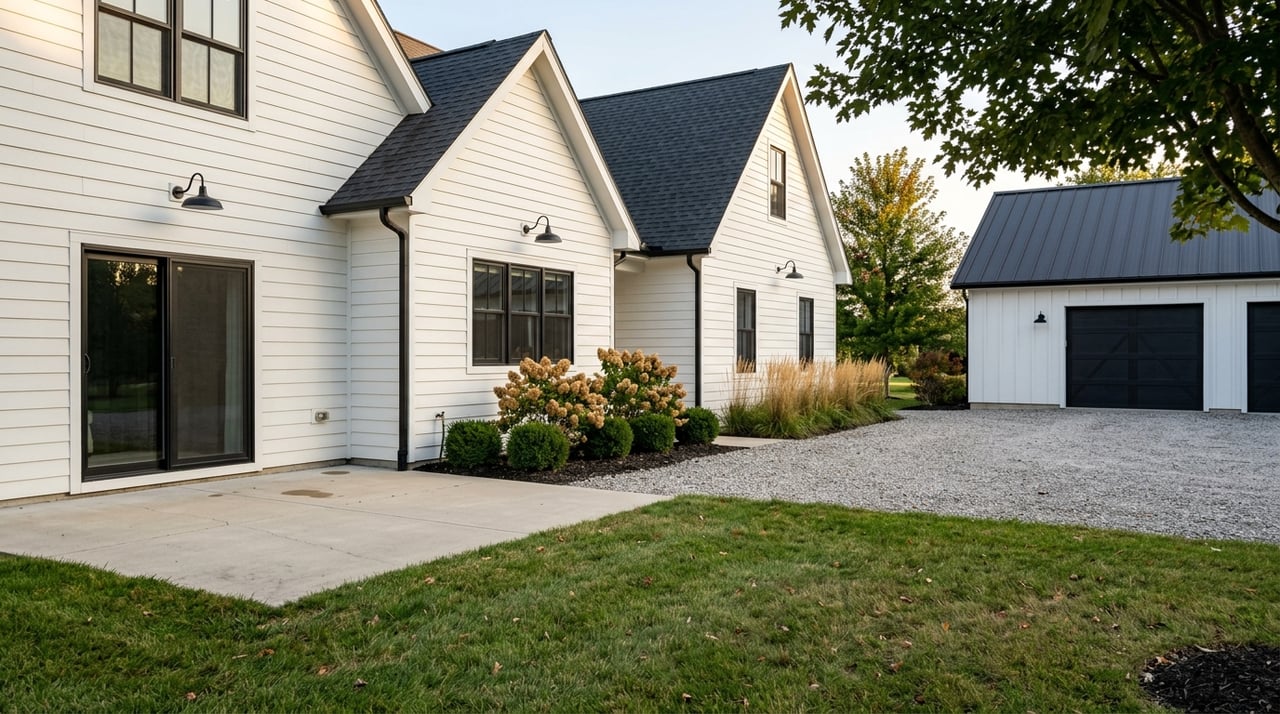
Acreage near Plain City is often a better fit if you want more site control. This can be appealing if you are thinking about a detached garage, workshop, larger yard, or a property layout that does not fit neatly into a subdivision lot.
That flexibility can be significant in nearby township zoning districts. In Jerome Township, for example, the AG district requires a minimum lot size of 5 acres and minimum width of 300 feet, while the RU district requires a minimum lot size of 1.5 acres and minimum width of 150 feet. On-site water and sewer can also be permitted there if county health requirements are met.
Why acreage appeals to some buyers
If you value room to spread out, acreage may better match your goals. Accessory-building rules in Jerome Township can scale with lot size, up to 5,000 square feet on lots of 5 acres or more.
That matters if your vision includes uses that are harder to fit into a managed neighborhood. Depending on the parcel and local zoning, acreage may give you more opportunity for:
- A barn or large outbuilding
- A detached garage
- A workshop or hobby space
- More separation between structures
- More individualized site design
- A less uniform setting
For the right buyer, that extra freedom is worth the added complexity.
The tradeoffs with acreage
Acreage usually asks more of you during the planning stage. Utility feasibility, access, site layout, and permit coordination become part of the buildability test, not just details to handle later.
Union County requires zoning approval for county-handled building permits in surrounding areas. If a property is not served by public water and sewer, the county also requires septic and well approvals, and for unincorporated sites it also asks for an address or driveway permit. That means you need to understand the property before you assume it is ready to build on.
Utilities can change the whole decision
One of the biggest practical differences between new construction in a neighborhood and acreage near Plain City is utilities. In a subdivision or PUD setting, utility service is often more straightforward because the development was planned around it.
Plain City now relies on Mid-Ohio Water & Sewer District for water and sewer services. According to the village FAQ, joining the district was driven in part by the fact that the village could no longer expand its own water and sewer facilities because of Big Darby Creek constraints. For buyers, that helps explain why a neighborhood lot can feel more predictable than a rural parcel.
Why utility planning matters on acreage
On acreage, you may need well and septic or another site-specific solution if public utilities are not available. That can affect cost, timelines, and where the home, driveway, and outbuildings can actually go.
This is one reason land shopping is different from home shopping. A parcel may look ideal on paper, but the real question is whether access, utilities, and approvals line up with your plans.
Permits and approvals are not the same
If you are buying inside Plain City, a zoning permit is required before a new structure is erected, moved, added to, altered, or demolished. The application must include scaled plans, setbacks, access drives, and other site details. The village states that decisions are made within 30 calendar days.
That same code also says a zoning permit can expire if work does not begin within one year or is not substantially completed within 2.5 years. No building can be occupied until a Certificate of Occupancy is obtained from both Union County and the Village of Plain City.
Why timelines feel more predictable in neighborhoods
A platted lot with public utilities usually has fewer variables left to solve. Union County says permits requiring drawings are reviewed within 30 days, while permits that do not require drawings are typically issued within a week. Phased plan approvals are also available, but only for the approved stage and at the applicant’s risk.
In practical terms, a builder lot in a neighborhood often moves with fewer surprises than a custom parcel that still needs driveway, utility, grading, or zoning work. That does not make acreage a bad choice. It just means the process often requires more coordination.
Property rules can shape your long-term satisfaction
Before you buy, it helps to think beyond the house itself. Ask what you may want to add later, whether that is a fence, pool, detached structure, or exterior changes.
In Plain City, accessory structures are generally more controlled. They must be associated with a principal use, located to the rear of the principal structure, kept at least 5 feet from the principal structure, and limited to two accessory uses per lot. Fence rules are also specific, with side and rear yard fences allowed up to 6 feet, front-yard fences up to 3 feet, and a zoning permit required.
Questions to ask before you commit
Whether you choose a new construction neighborhood or acreage, these questions can help you avoid surprises:
- Is the lot in Plain City, Jerome Township, or another jurisdiction?
- Is it in a platted subdivision or on unincorporated land?
- Are public water and sewer available?
- Will you need septic, well, or driveway approvals?
- Are HOA or association rules stricter than zoning?
- Do you want future space for an outbuilding or detached garage?
- How much project coordination do you want to manage yourself?
These answers can quickly clarify which option fits your goals.
Which path fits your lifestyle best?
If you want amenities, a clearer utility path, and more predictable approvals, new construction in a planned neighborhood may be the better fit. If you want more land, more flexibility for outbuildings, and more control over the site, acreage may be worth the extra work.
The right answer is not just about price. It is about your lifestyle and your tolerance for project management. Some buyers want a streamlined process with neighborhood structure, while others are happy to take on zoning, access, and utility questions in exchange for a more customized property.
With Plain City, those differences are especially important because local rules, utility availability, and property type can change the buying experience in a big way. If you compare options with those factors in mind, you can make a decision that fits both your plans now and your property goals later.
If you are weighing new construction versus acreage in Plain City, having local, construction-aware guidance can make the process much clearer. Terra Shoaf can help you compare neighborhoods, evaluate land opportunities, and make a confident plan for your next move.
FAQs
Should you buy new construction or acreage in Plain City?
- If you want a more predictable process, public utilities, and neighborhood amenities, new construction may fit better. If you want more site control, space for outbuildings, and a less structured setting, acreage may be the better choice.
Do Plain City new construction neighborhoods usually have HOA rules?
- Many planned neighborhoods do have HOA or association oversight, and those rules may be stricter than local zoning for features like fences or exterior changes.
Do acreage properties near Plain City need well and septic approvals?
- They can. In surrounding county-handled areas, if a property is not on public water and sewer, septic and well approvals are part of the permit process.
How long do Plain City zoning permit decisions take?
- The Village of Plain City states that zoning permit decisions are made within 30 calendar days when a permit application is submitted.
Can you build a large outbuilding on acreage near Plain City?
- In some township zoning districts, larger accessory buildings are possible depending on lot size and district rules. For example, Jerome Township allows accessory-building area to scale up to 5,000 square feet on lots of 5 acres or more.
Do you need a Certificate of Occupancy for a new home in Plain City?
- Yes. Plain City code states that a building cannot be occupied until a Certificate of Occupancy is obtained from Union County and the Village of Plain City.