Thinking about trading a quieter routine for a more walkable, city-centered lifestyle in Columbus? If you are comparing the Short North and the Arena District, the biggest difference is not just where you live. It is how your days and nights tend to feel once you are there. This guide will help you understand the housing, pace, parking, dining, and daily rhythm in each area so you can decide which one fits you best. Let’s dive in.
Short North vs. Arena District
If you visit both neighborhoods in the same day, you will likely notice the contrast right away. The Short North Arts District feels like a continuous main-street corridor centered on High Street, with historic and modern buildings, public art, and more than 300 businesses. The Arena District, by comparison, is a 75-acre mixed-use district downtown where daily life is shaped more by arenas, offices, entertainment, and event traffic.
That difference matters when you picture your everyday routine. In the Short North, you are more likely to feel connected to a street-level neighborhood experience. In the Arena District, you are more likely to feel anchored near major venues and a busier entertainment core.
What living in Short North feels like
The Short North is a strong fit if you want your neighborhood to feel active throughout the day. High Street is the center of gravity, and daily life can include coffee stops, casual meals, shopping, galleries, and public art all within a walkable setting. The district is designed around movement on foot, with stores and restaurants woven into the streetscape.
You may also find that the area supports everyday errands better than people expect from an arts and nightlife district. The district’s dining categories include breakfast and brunch, coffee, lunch, dinner, sweets, local beer and spirits, and bars and nightlife. That variety helps make the neighborhood feel livable, not just fun on weekends.
One of the clearest rhythm-setters is Gallery Hop. It takes place on the first Saturday of every month from 4 to 8 p.m., drawing thousands of visitors for art, vendors, and street performers along High Street. If you like energy and activity, that can be a major perk. If you prefer a quieter, more predictable Saturday evening, it is something to keep in mind.
Short North housing options
Housing in the Short North leans heavily toward apartment living, historic conversions, and mixed-use buildings. The district’s listings highlight apartment communities and buildings that blend older character with newer design. You are more likely to find boutique urban living here than a traditional single-family setup.
Where ownership options exist, they tend to feel more condo- or loft-style. If you want a private yard and a driveway, this area may feel very different from suburban living. If you want a home base near restaurants, art, and daily foot traffic, that tradeoff may feel worthwhile.
Short North parking and transit
The Short North is walkable, but parking is part of the lifestyle conversation. The district says there are about 8,900 parking spaces, and paid parking is handled through ParkColumbus. Resident permit information also matters, especially if you live on or near side streets where parking is managed more like an urban district than a suburban neighborhood.
Transit can reduce how often you need to drive. COTA Line 2 runs along High Street and connects the Short North with Downtown, Clintonville, and Bexley. The area is also served by routes 1, 2, 4, 5, 8, 12, and 102, and some eligible residents can use C-pass for unlimited COTA access through the local partnership in the district.
What living in the Arena District feels like
The Arena District offers a different kind of urban experience. It is still walkable, but the atmosphere is more tied to events, entertainment, and downtown access. Instead of feeling like one long neighborhood corridor, it feels more like a modern mixed-use district built around venues, offices, and residential buildings.
That can be a great match if you want easy access to sports, concerts, and nights out. On game days and event nights, the neighborhood energy rises quickly. The flip side is that traffic, parking demand, and foot traffic can shift based on what is happening at nearby venues.
The district also has some daytime balance. In addition to bars and restaurants, the northern edge connects you to North Market, which features 35 local vendors. That gives you more than just a pregame or post-event food scene and adds flexibility to your everyday routine.
Arena District housing options
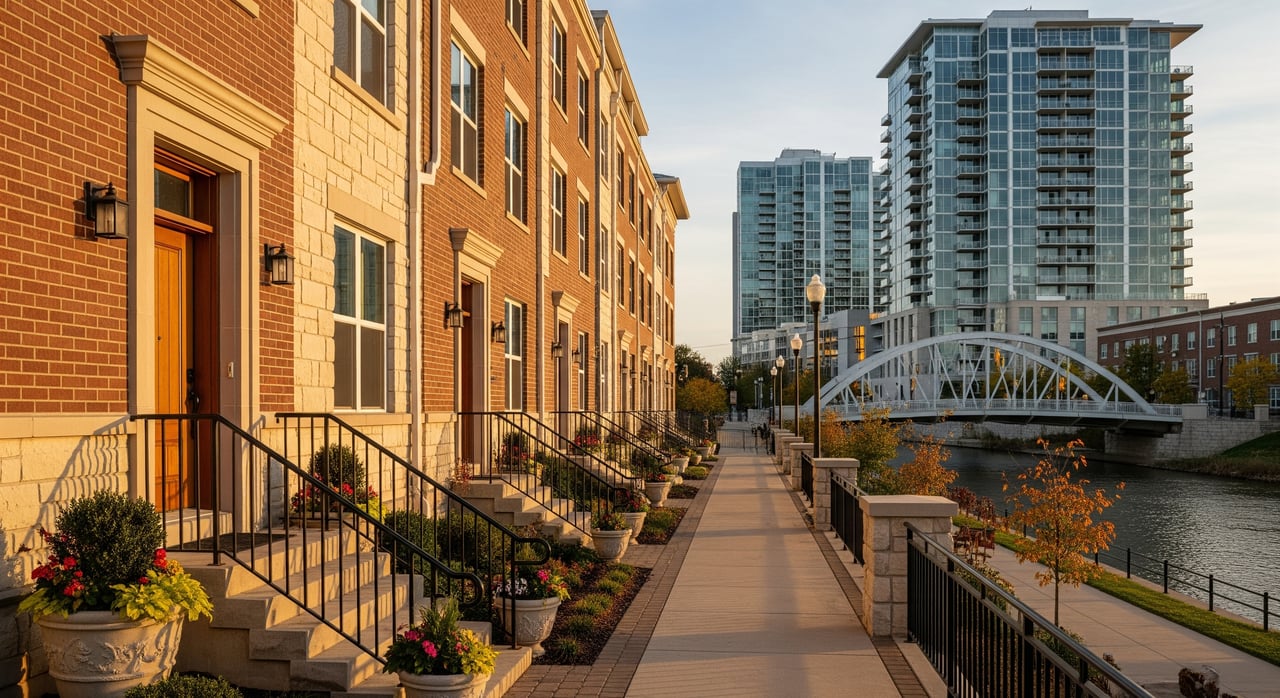
The Arena District has a more clearly defined residential inventory than many people expect. The district points to studio, one-bedroom, and two-bedroom apartments, luxury condominiums, and some townhomes. It also reports more than 1,200 residences within the district.
Named communities include Arena Crossing, Flats on Vine, Flats II, Two Twenty Vine, The Centennial on High, and Burnham Square Condominiums. If you are looking for newer apartment or condo options in a downtown setting, this district gives you a focused set of choices. If you want a more classic neighborhood street pattern, it may feel less residential in that traditional sense.
Arena District parking and transit
Parking becomes especially important in the Arena District on event nights. Nationwide Arena reports more than 15,000 parking spaces within a 10-minute walk, and traffic and parking conditions vary by event. Pick-ups and drop-offs are handled on West Street, which is helpful if you often use rideshare.
The district also emphasizes garages and on-street parking. Its DORA is activated three hours before games or events at Nationwide Arena, Huntington Park, and ScottsMiracle-Gro Field, which adds to the entertainment-driven feel. For transit, COTA shows the Arena District served by routes 3 and 8, with multiple downtown-area stops within a short walk of the convention and arena corridor.
Which neighborhood fits your lifestyle
If you are deciding between the two, start by thinking about your weekly rhythm rather than just your floor plan. The Short North is often the better fit if you want continuous street life, walkable dining, art-focused identity, and a neighborhood where daily activity is spread throughout the corridor. It tends to feel more like living inside an active main street.
The Arena District may be the better fit if you want newer apartment and condo options, quick access to major events, and a downtown home base that feels connected to sports and entertainment. It can be a very convenient choice if concerts, hockey games, baseball games, and nightlife are already part of how you like to spend your time.
Neither lifestyle is better across the board. It really comes down to whether you want your daily life shaped more by a neighborhood corridor or by a venue-centered district.
Tradeoffs to expect in both areas
Both neighborhoods offer walkability, but both also ask you to adjust expectations if you are coming from a suburb-style setting. Shared parking, permit rules, garages, and event-related congestion are part of the experience. You are trading some private-space convenience for proximity, energy, and easier access to dining, entertainment, and transit.
That is why an in-person tour matters so much. A home that looks perfect on paper may feel very different at 10 a.m. on a weekday than it does during Gallery Hop or before a major game. When you visit, pay attention not only to the property itself, but also to noise, traffic flow, parking access, and how easy it feels to move through the area.
How to choose with confidence
If you are serious about living in either district, it helps to narrow your priorities into a few simple questions:
- Do you want a neighborhood built around High Street activity or around event venues?
- Do you prefer boutique apartment and mixed-use living or a newer apartment and condo inventory?
- How important is daily walkability for coffee, meals, and errands?
- Are you comfortable planning around parking rules and event traffic?
- Would you use COTA often enough to reduce how much you drive?
When you answer those questions honestly, your choice usually becomes clearer. The right fit is the one that supports the way you already like to live, not the one that simply sounds exciting at first glance.
If you want help comparing Columbus neighborhoods and finding the right home for your lifestyle, Terra Shoaf can help you weigh the details and move forward with confidence.
FAQs
What is the main lifestyle difference between Short North and the Arena District in Columbus?
- The Short North feels more like a continuous main-street neighborhood centered on High Street, while the Arena District feels more tied to sports, concerts, offices, and event-driven activity.
What types of homes are common in Columbus’ Short North?
- The Short North is known for apartment living, historic conversions, and mixed-use buildings, with some condo- or loft-style ownership options where available.
What types of homes are common in Columbus’ Arena District?
- The Arena District includes studio, one-bedroom, and two-bedroom apartments, luxury condominiums, some townhomes, and more than 1,200 residences overall.
Is parking difficult in the Short North in Columbus?
- Parking is manageable, but it is part of urban living there, with about 8,900 parking spaces, paid parking through ParkColumbus, and resident permit rules on some streets.
Is the Arena District in Columbus busy on event nights?
- Yes. Traffic, parking demand, and foot traffic can increase significantly during events at nearby venues, and parking conditions vary by event.
Can you live in Short North or the Arena District without driving everywhere?
- Both areas are walkable and served by COTA, which can make them workable without full-time car dependence for many residents.
What is Gallery Hop in Columbus’ Short North?
- Gallery Hop is a monthly event held on the first Saturday of every month from 4 to 8 p.m., when visitors gather along High Street for art, vendors, and street performers.